
A storyboard is the sequential visual plan that maps every shot of a film, animation, or motion piece before any frame is built, any asset is modeled, or any light is placed. Storyboarding sits at the intersection of writing, cinematography, and design, and it is the stage where the visual logic of a sequence gets resolved before production costs are on the line.
For 3D animators, VFX artists, and motion designers, it is a foundational discipline that runs through every production pipeline, from the first thumbnail pass through to the animatic that locks the edit.
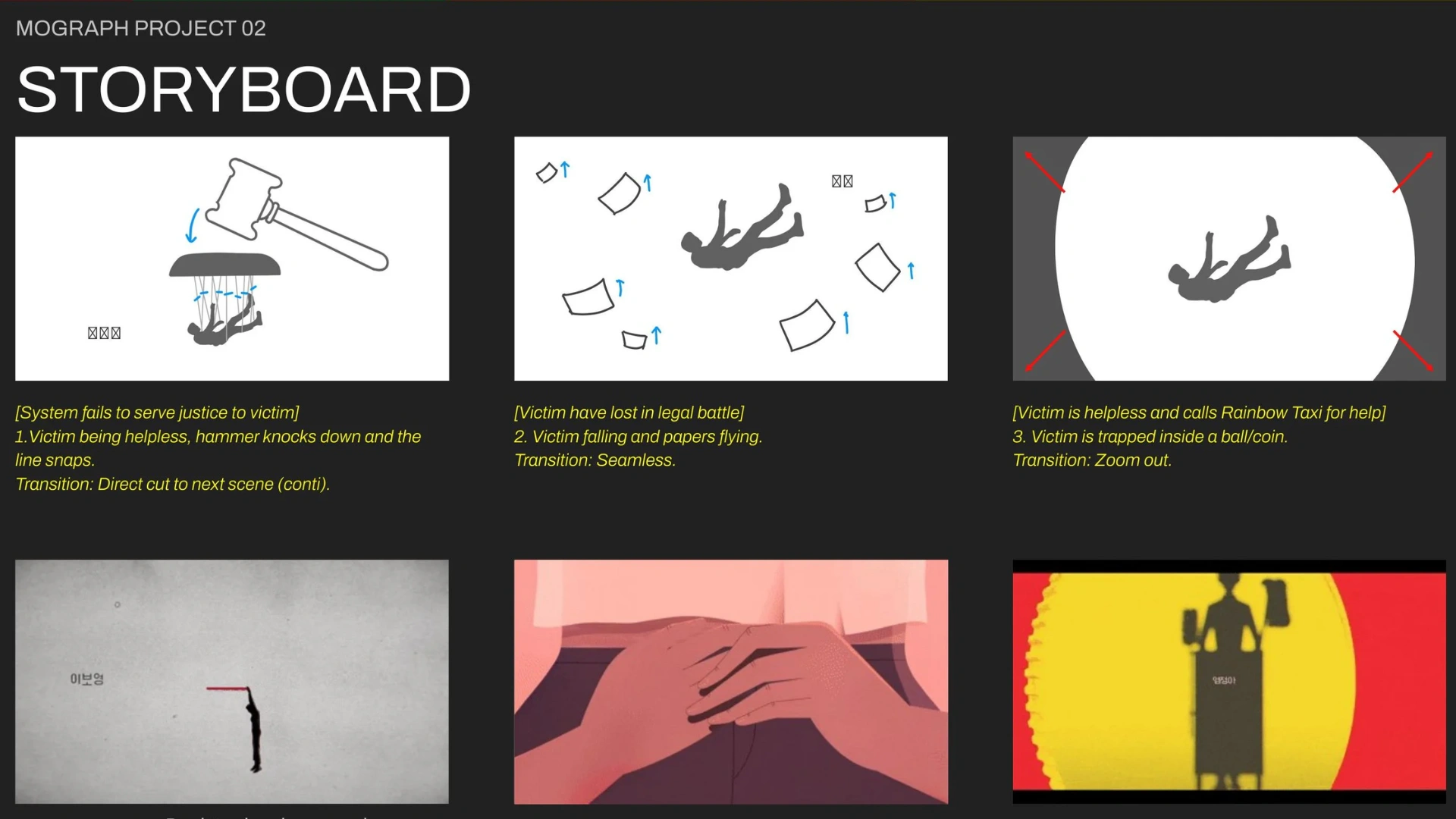
Featured Art: Storyboard by Natasha Wisheilla
What is a Storyboard?
A storyboard is a series of drawn or digitally composed panels that show composition, camera movement, action, and timing for each shot in a sequence. Understanding the meaning and what it involves as a discipline requires distinguishing it from two adjacent documents: the script, which describes events in prose, and the animatic, which plays the boards in motion against rough sound.
The storyboard sits between them. It translates the script's language into visual decisions while the animatic tests whether those decisions hold up in time.
That said, storyboarding is a discipline, not a sketch exercise. Panels do not need to be illustrations. They need to be clear. Precision matters because the board is first and foremost a communication tool. The artist's job is to make each shot legible to every department that will work from it.
Why Storyboards Are the Backbone of Visual Production
The production logic behind storyboarding is direct: solving visual problems on paper is cheap. Solving them after a 3D asset has been modeled, lit, and animated is not. By resolving shot composition, continuity, and pacing at the board stage, the storyboard prevents expensive mistakes from propagating through modeling, animation, lighting, and compositing.
The boards also function as a cross-department reference document. Cinematographers, animators, modelers, sound designers, and editors all work from the same panels, which keeps the team aligned on shot intent. Story problems that surface during boarding can be addressed through rewrites and re-thumbnailing before any asset or live-action shot has been committed to.
What that production logic does not immediately suggest is how creative the board stage is. Before the 3D animation process moves into modeling, layout, and rendering, storyboarding is where the piece's visual identity first takes coherent shape. The boards are technical scaffolding. The decisions inside each panel are where the story begins.
The Anatomy of a Storyboard Panel
Each panel in a storyboard carries several layers of information that feed directly into production decisions:
- Composition: Framing, character placement, and the shot's focal point, establishing what the audience reads first.
- Camera notation: Shot type (wide, medium, close-up), camera movement (pan, dolly, zoom, handheld), and lens choice where specified.
- Action arrows: Indicating motion within the frame or movement of the camera itself.
- Dialogue and sound cues: Noted beneath or beside the panel for editorial reference.
- Timing notes: Beat counts, frame counts, or duration markers that feed directly into the animatic.
Each notation translates into a decision an animator, modeler, or compositor will execute downstream. A camera move becomes a layout decision in 3D space. A timing note becomes a frame count an animator builds to. The board is the plan. The production is its execution.
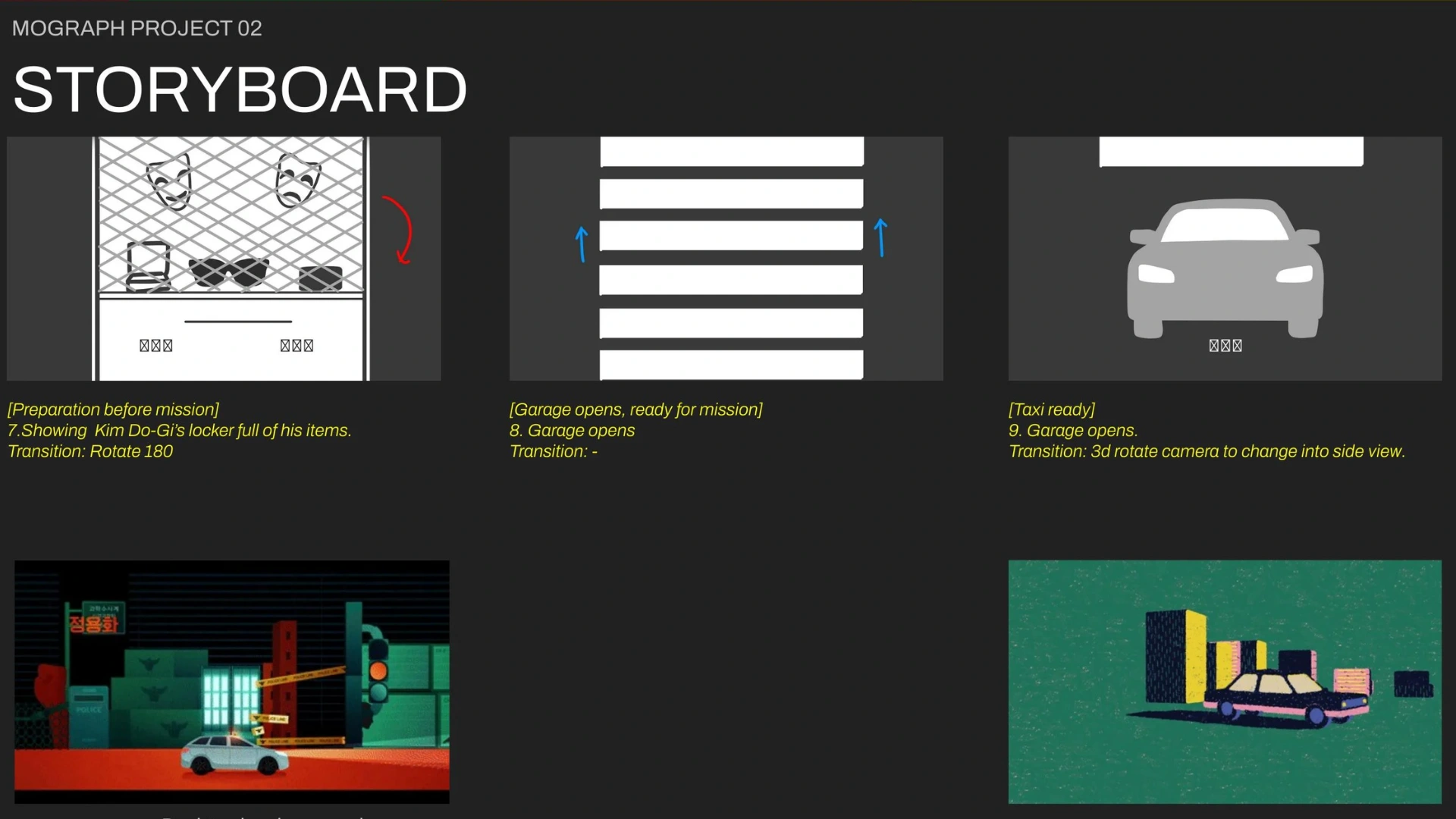
Featured Art: Storyboard by Natasha Wisheilla
The Storyboarding Process: From Script to Final Boards
The storyboarding process moves through four stages, each building on the last.
1. Thumbnails
Thumbnails are small-scale exploratory drawings that test shot ideas before committing to any composition or sequence. Volume matters more than polish at this stage. The goal is to generate enough options that the team can compare, eliminate, and refine. A strong thumbnail pass prevents the rough board stage from becoming a revision session in disguise.
2. Rough Boards
The rough board is the first cohesive pass at the full sequence, with shot order locked but framing and action still negotiable. Directors and leads assess the sequence as a whole at this stage before individual panels are refined.
3. Clean Boards
Clean boards are refined panels with finalized composition, action, and camera notation, ready for cross-department review. Every ambiguity left in them becomes a decision someone else makes downstream, under more pressure and at greater cost.
4. Animatic
The animatic cuts the boards to timing, adding rough sound, dialogue, and music so the team can see the sequence move before production begins. It is the last point at which pacing can be revised without incurring production costs. The storyboard artist has made the shot-level decisions the rest of the pipeline will execute. The animatic is where those decisions become irreversible.
Featured Work: Opening Title by Natasha Wisheilla
Storyboarding Across Disciplines: Film, Animation, and Motion Graphics
The storyboard's application changes by medium, but its function does not.
In film and live-action, boards prioritize shot composition, camera blocking, and continuity between takes. Directors pre-solve blocking decisions before the crew assembles on set.
In 3D animation, the boards drive the animatic, which becomes the structural reference for modeling, layout, and shot production. Every asset built in the pipeline serves a shot the board already defined.
In motion graphics and short-form video, storyboards focus on transitions, typography moments, and beat-by-beat pacing for commercials, brand campaigns, and explainer pieces. A storyboard for video in this context maps visual rhythm against the edit rather than narrative against time.
Across all media, the storyboard is where the piece's visual decisions are made before any production costs are incurred.
Build the Skill at 3dsense Media School
Storyboarding is taught at 3dsense Media School as a production discipline, not a standalone drawing module, because the skill develops only when students understand the pipeline it feeds into.
The 3D Animation, VFX & 3D Modeling Diploma covers storyboarding as the entry point into the full animation pipeline, leading into modeling, rigging, animation, and rendering. Students learn to board sequences with the animatic in mind, developing the visual planning fluency that studio productions depend on.
The Motion & Graphic Design Diploma develops storyboarding for short-form video, broadcast graphics, and commercial work, where timing, transition design, and beat-by-beat pacing are the skills the boards are built to test.
Both programs are mentored by lecturers with direct studio experience and structured around production-ready portfolio outcomes. Graduates leave with the visual planning discipline to enter animation studios, VFX houses, and motion design studios across Asia and beyond.
Find out what your future could be as an animator, VFX artist, or motion designer at 3dsense Media School, a digital art school in Singapore ranked Top 5 Creative School Worldwide by The Rookies in 2025.



 Chat Now