
You might hear or see the phrase “industry-ready” used a lot, especially in creative school marketing materials or online discussion forums. So what exactly does “industry-ready” mean in terms of education for creative careers?
The short answer: Being industry-ready means an employee candidate has the technical skills and work habits needed to contribute in a professional production environment. This includes understanding how creative work gets made, how feedback shapes the work, and how to produce work that meets a high professional standard.
Industry-ready artists understand production workflows, use industry tools, and create work that meets studio standards. They are “ready” to enter the workforce.
Why Job Readiness Is Often Misunderstood
Students often misunderstand what employers are looking for in job applicants. For example, you might think that if you master a certain program or complete a specific qualification, you are automatically employable.
In reality, employers are not just focused on technical proficiency or credentials. They need people who can think critically, solve problems, communicate well, and adapt in fast-paced working environments.
They are not looking for perfection or for applicants who have a collection of random credentials. But they definitely want to see a strong portfolio.

Featured Work: Game Art Environment by Wee Zheng Bin
Why Portfolios Matter So Much
The first thing creative employers usually look at is your work. They want to see pieces you have created and team projects you have worked on. They want to understand your thought processes and decisions along the way as you work on those things.
They need to be able to assess, through your portfolio, whether you understand the real-world demands of professional production. That is why a portfolio should not just be a collection of your pieces! It is actual evidence showing your technical ability, design judgment, growth, understanding of form and storytelling, and your level of finish.
Academic credentials are an asset, but employers want to see portfolios that demonstrate your ability to produce relevant work.
Understanding Pipelines
Industry-ready artists must also understand production pipelines, the systems that help teams move work from concept to completion.
In a studio, work rarely happens in isolation. Projects move through stages, with different artists handling different tasks. Files pass between roles, revisions are ongoing, and everybody has deadlines to meet.
Knowing how your work fits into a wider production process is a key ingredient to being industry-ready.
How Educational Projects Prepare Students
Strong creative education programs go beyond theory and software tutorials; they simulate the way work actually gets developed!
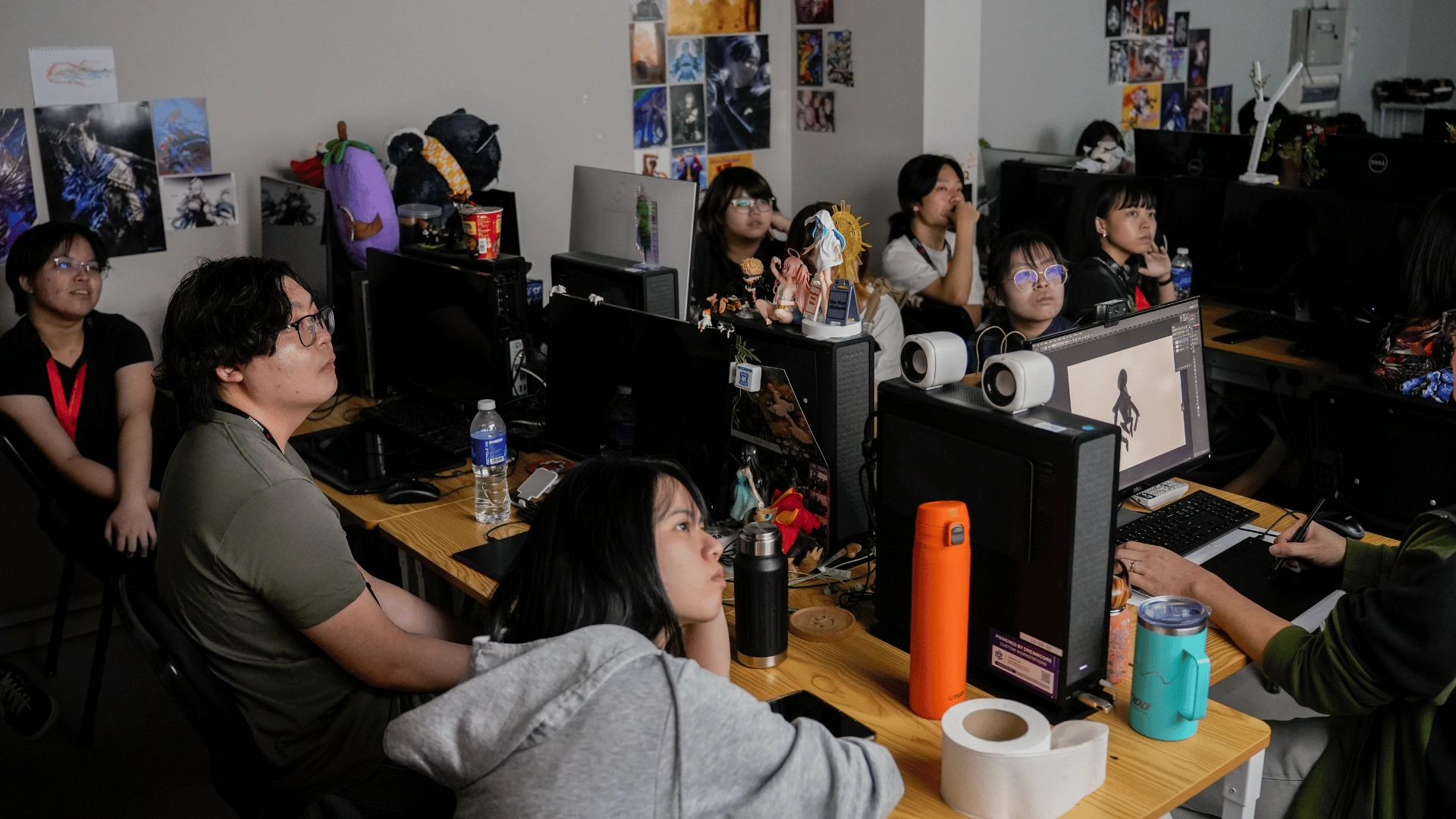
Students are given briefs, deadlines, expectations, and constraints. They work toward a goal, present drafts, receive notes, revise, and improve. They gain experience making art and delivering project work.
Mirroring real pipeline production is not always glamorous, but it does give students a feel for what to expect in actual studio work. Employers appreciate that experience because it shows that an applicant knows how to execute.
Feedback and Iteration
Strong work is rarely produced on the first try. Professional creative work tends to be shaped through a process of critical review, refinement, and adjustment. Thus, industry readiness includes the ability to solve problems, respond to critique, improve work under constraints, and keep moving without losing sight of the brief.
In practical terms, that involves actions such as reworking compositions, refining models, adjusting timing, changing concepts, and responding to direction in a positive manner. Students who learn to handle feedback and iteration early are generally better prepared for studio work.

Why Software Is Not Enough
Students often confuse tool familiarity with production readiness. Software obviously matters, but being adept at using a program does not make someone industry-ready. You have also got to master principles such as composition, perspective, form, color, storytelling, and design thinking.
Putting those skills into practice through project-based assignments, exercises, and critiques helps students translate their foundations into practical skills that can adapt to changing tools and workflows. Studios do not just want workers who can follow steps.
Studios need artists who understand why a decision works, how to fix it when it does not, and how to maintain quality during production.
Specialization Helps Job Readiness
Students benefit from learning about foundational topics such as visual language, design logic, storytelling, and problem-solving. But as they move closer to employment, specialization becomes crucial because studios hire for specific roles such as animators, modelers, concept artists, texture artists, compositors, and motion designers.
Job readiness happens when strong fundamentals are paired with a clear area of focus. So a student who understands the basics but also has a well-developed, specialized portfolio is likely in a stronger position than an applicant with a lot of breadth but no real depth.

How Industry-Aligned Programs Work
Industry-ready programs such as those offered by 3dsense Media School pay attention to current employer needs and prepare students to meet those requirements.
They emphasize portfolio quality, expose students to workflows, incorporate feedback and revision, and move students from broad creative development toward specialization.
At the same time, such programs still leave room for experimentation, culture, and critical thinking. Essentially, they prepare students for real work while also helping them grow into thoughtful practitioners.
An overview of that structure looks like this: fundamentals first, practical application, critiques, project-based assignments, and work that prepares students to adapt to evolving tools and workflows.
Final Thoughts
In short, being industry-ready means being able to step into a professional environment with a strong portfolio, an understanding of pipelines, the ability to take feedback, and the focus to contribute in a specific role.
For students considering their options, choosing an industry-aligned program can help make the transition into creative careers smoother and more practical. At 3dsense, that preparation is built around portfolio development, production workflows, and specialization that reflect real studio expectations.



 Chat Now