
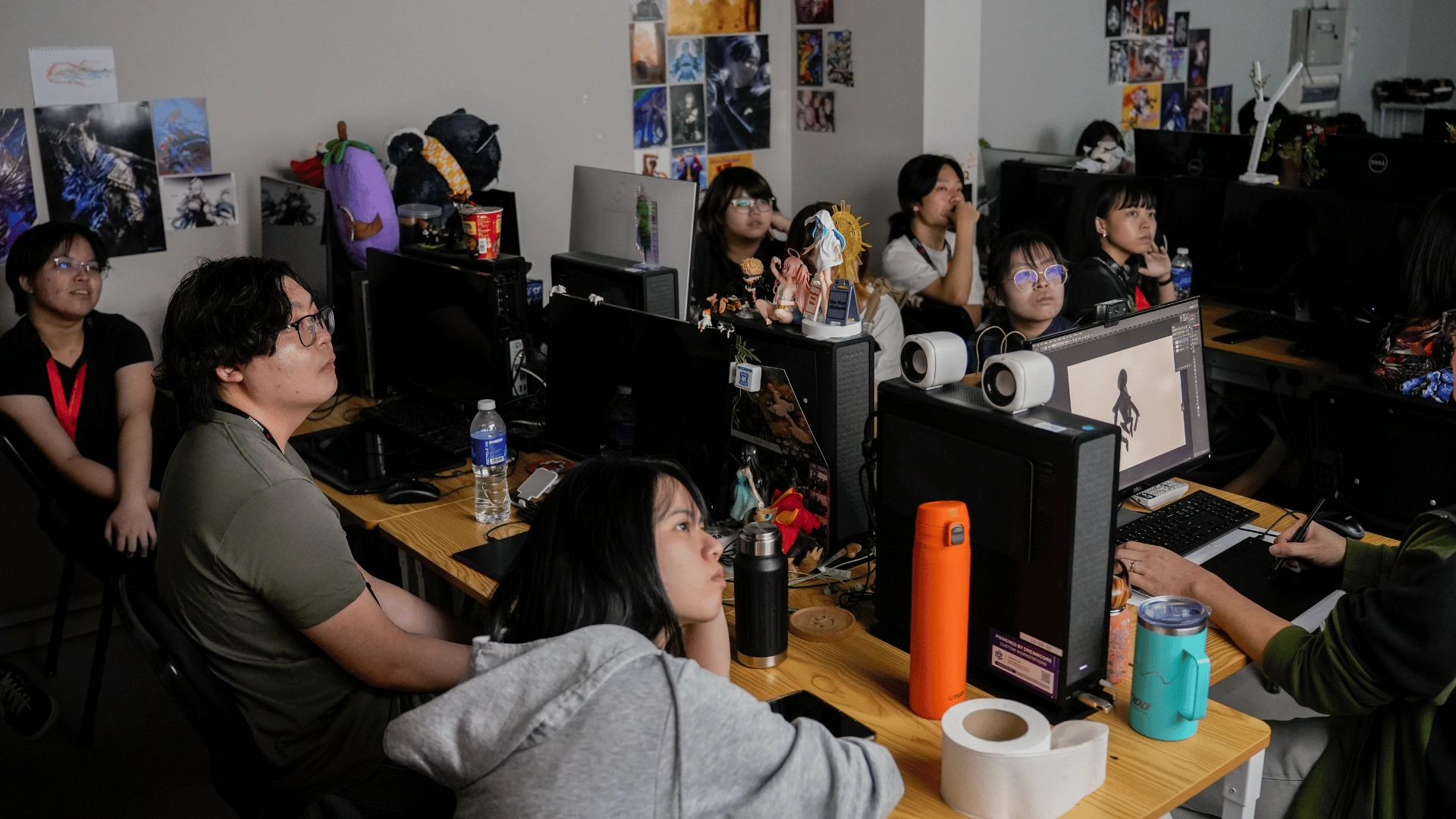
At 3dsense Media School, we continually seek ways to bridge the gap between education and the professional creative industry. One of the most exciting ways we do this is through hands-on collaborations with industry leaders. Most recently, we partnered with Adobe and leading creative agency Carbon Moves to deliver an immersive workshop that introduced our students to Substance 3D tools and cutting-edge workflows in motion design.
This collaboration wasn’t just about learning new software; it was about inspiring our students to think creatively, experiment boldly, and bring their stories to life through motion design.
Diving Into Substance 3D Painter
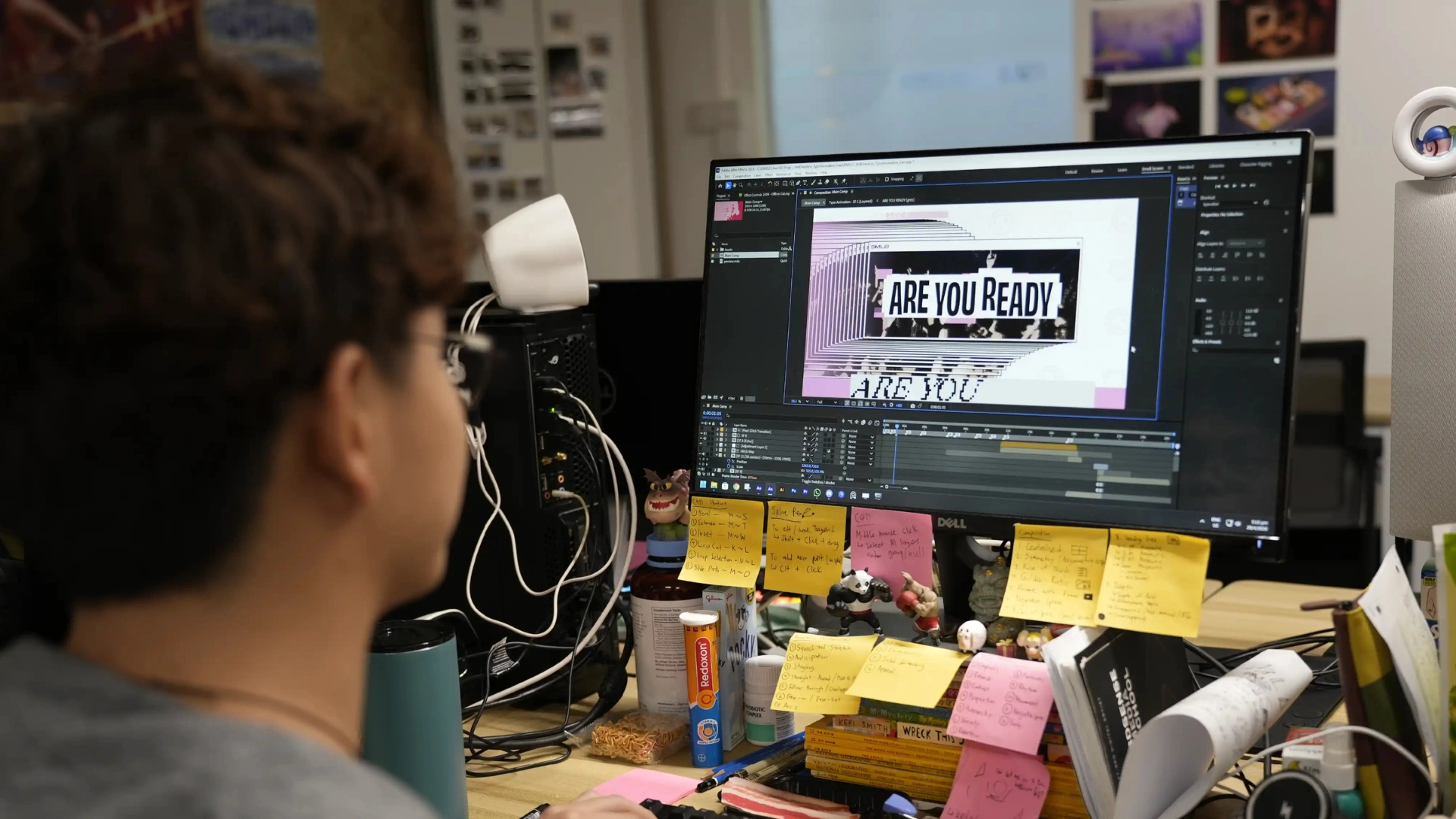
The workshop focused on Adobe’s Substance 3D Painter, a suite of tools that allows designers to texture, render, and manipulate 3D assets in innovative ways. Students explored how to transform everyday objects into visually compelling designs, learning not just the technical applications of the tools but also how to integrate them into motion graphics workflows in Cinema 4D and After Effects.
Leading the session was Tomas Sackmann, Senior 3D Artist at Tencent Singapore, who guided students through Substance 3D Painter. “Substance 3D Painter is a game changer,” Tomas said. “It brings an extra level of realism to motion graphics and lets students achieve a high level of quality fast.”
Through this process, students gained insight into how professional motion designers approach storytelling, composition, and material creation, skills that are crucial in both commercial projects and personal portfolio work.
“The goal of this workshop is to give students confidence,” says Alwyn Hunt, head of education partnerships at Adobe. “We hope it helps them bridge that gap between leaving education and stepping into the industry.”
From a Simple Object to a Narrative
Students were challenged with a simple brief: turn a 3D model of a piece of luggage into a short animated clip. Through this exercise, they learned how animation, texturing, and lighting can bring life to everyday objects and lend them personality.
“The idea was for them to give the object a personality,” explained Jeslyn Khoo, 3D Motion Designer at Carbon Moves. “Not just decorate it, but design it with intent.”
This approach reinforced a core principle of motion design: every design choice communicates story and emotion.

Collaborative Workflows: Team CMYK
For Team CMYK, led by Cleo Jocson, students applied the workshop lessons in a collaborative, professional-style workflow:
- Team Creative designed stickers, animated them in After Effects, and refined suitcase textures in Substance 3D Painter.
- Team Technical built the environment in Cinema 4D, managed animation, and used assets from the Substance 3D library to create a kit-bashed airport scene.
“Integrating Substance 3D Painter opened up so many possibilities,” Jocson explained. “I could create detailed objects while keeping things low-poly, which made animation in Cinema 4D more efficient.”
This workflow highlighted the importance of team organization, pipeline efficiency, and creative problem-solving, key skills for industry-ready motion designers.
Learning Through Mentorship
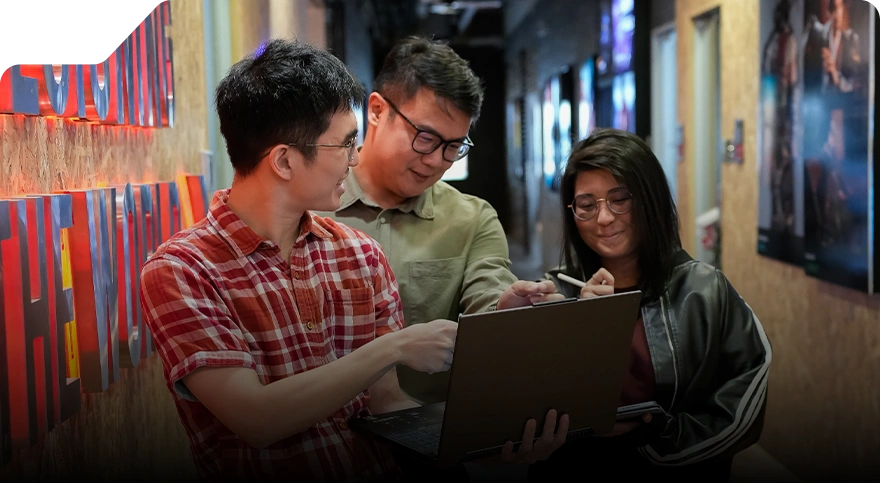
One of the most valuable aspects of this collaboration was the mentorship component. Adobe and Carbon professionals guided students through exercises, offered feedback, and shared industry best practices.
Students were encouraged to experiment with textures, lighting, and composition, learning that the most compelling motion design isn’t just about flashy effects, it’s about telling a story and engaging an audience.
For many students, this workshop was the first time they saw how theoretical skills learned in the classroom could be applied in a real-world professional setting. It’s one thing to learn the tools; it’s another to understand their application in storytelling and production pipelines.

Empowering Artists Through Tools
A highlight of the workshop was hearing from Justin Chua, co-founder of 3dsense Media School, on the broader impact of Substance 3D Painter for students:
“This workshop didn’t just open up their world, but it also empowers them with a new tool. Using Substance 3D Painter not only makes them more efficient in their workflow, but it also makes them better artists.”
This statement captures the essence of 3dsense’s approach: combining technical skill, creativity, and storytelling to develop students who are ready for the industry. Workshops like these equip students not only with knowledge of tools but also with the confidence to tackle real-world projects creatively.
Transforming Inspiration Into Real Work
The students left the workshop with polished motion design projects that reflected both their personal creativity and their newfound technical skills. By using Adobe Substance 3D, they were able to transform ordinary objects into dynamic, interactive digital art pieces.
This hands-on approach not only enhances their portfolios but also instills confidence as they prepare to enter the professional world. Many students noted that seeing their work evolve in real time, under the guidance of industry experts, was an eye-opening experience that will influence their future projects.

Why Industry Partnerships Matter
Workshops like this highlight the importance of collaborations between schools and industry leaders. At 3dsense, we are committed to providing students with experiences that go beyond textbooks and lectures, giving them a taste of what it’s like to work on professional projects.
By working alongside Adobe and Carbon mentors, students gain the opportunity to experiment, receive professional feedback, and apply creative thinking in real-world scenarios. These workshops help students not only master the tools but also develop the critical mindset required to think like professional designers.
Key Takeaways
- Every object tells a story — animation, textures, and lighting transform ordinary items into narrative elements.
- Substance 3D Painter empowers creativity — it streamlines texturing while encouraging experimentation.
- Collaborative workflows matter — dividing creative and technical tasks mirrors industry pipelines.
- Mentorship accelerates learning — guidance from experts bridges classroom knowledge with professional expectations.
- Emerging tools are shaping the industry — motion design is becoming cinematic, asset-driven, and integrated with gaming/VFX workflows.
Shaping the Next Generation of Creatives
Ultimately, this workshop exemplifies 3dsense’s mission: to turn passion into profession. By combining industry mentorship, real-world tools, and creative guidance, our Motion & Graphics Design program equips students to step confidently into careers in motion design, 3D animation, and beyond.
The collaboration left a lasting impression on students, faculty, and mentors alike, demonstrating that when education and industry collaborate, creativity thrives, innovation occurs. The next generation of motion and graphics designers is inspired to dream bigger.





 Chat Now