
Ever looked at someone else’s amazing artwork and wondered, “Could I do that?”
Many students love the idea of working as 3D animators or game artists, but worry they have to be good at drawing first. Luckily, you don’t.
Drawing is a useful skill, but it’s not a “gatekeeper” holding you back. Sure, basic drawing skills might help you get started but what you really need to develop first are observation skills, dedication, and willingness to learn.
If you already have those last two, then you’ve got what you need to begin your journey.
So if you’re interested in becoming a professional working 3D animator or game artist, let’s dive into it!
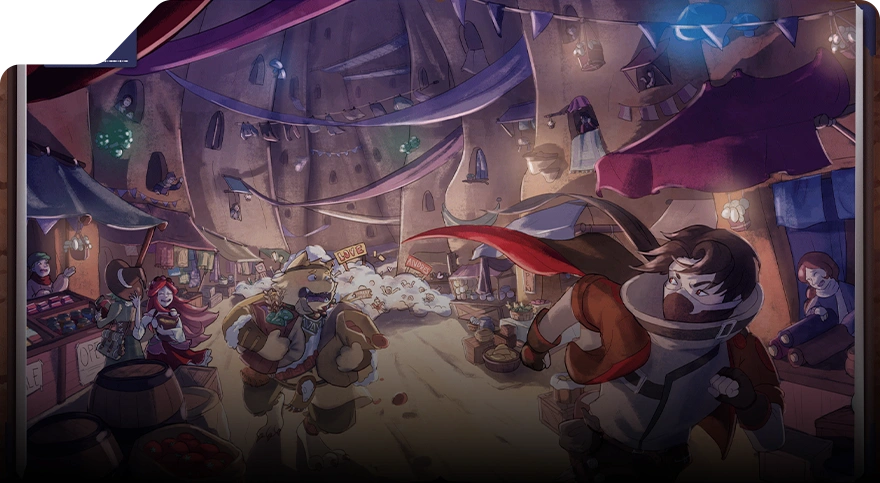
Featured Video: A Lead That Bled by Luqman Nur Hazim, 3dsense Media School Student
3D Is Not the Same Thing as “Being Good at Drawing”
We need to stress this point: 3D and game animation are art, but they aren’t produced the same way as most traditional artwork.
For example, creating 3D art is nothing like fine art illustration. Game art roles go way beyond creating concept art. And animation requires a lot more than just sketching characters.
Creating 3D Art
Traditional animation was hand-drawn, frame by frame. Modern 3D Animation is done with a computer, posing and controlling a virtual character like a puppet.
In 3D animation, what matters most is how characters move and feel alive, not how well you can sketch them. Instead of starting with a blank sheet of paper, you’re working inside software that enables you to rotate objects, adjust proportions in real time, test lighting, and refine details.
Traditional drawing translates 3D reality into 2D lines.
3D Art is made directly in three dimensions.
The focus is on depth, volume, structure, materials, and how light behaves across surfaces as you create moving characters, props, and environments. Think of it less like sketching and more like building with virtual clay, cameras, and tools that let you see your work from every angle.
It’s sort of like digital sculpting, where you’re solving spatial problems, such as: How does this object look from multiple viewpoints? Does the environment guide the player’s eye naturally?
Another big difference is iteration. Traditional drawing often means starting over when something doesn’t look right. But with 3D, you can push, pull, scale, duplicate, or adjust parts of a model easily, without starting over. This freedom encourages experimentation and learning through trial and error. You don’t need perfect hand control to make progress as you explore ideas.
Creating Game Art
When it comes to game art, there are tons of roles that don’t revolve around drawing at all.
Some artists specialize in hard-surface modeling, creating vehicles, architecture, or props based on reference images or technical designs. Others focus on environment art, building believable worlds through layout, storytelling, and composition.
- Lighting artists shape mood and guide attention through cinematic techniques.
- Technical artists bridge the gap between art and code, making sure assets perform well inside a game engine.
- Animators concentrate on timing, weight, and emotion rather than illustration skills.
Game development is also highly collaborative. One person may sketch the initial concept, while others transform that idea into a finished asset through modeling, texturing, rigging, animation, lighting, and optimization. Each step uses different tools and skill sets. Drawing can help at certain stages, but it’s rarely the sole requirement.

Featured Game Art Character: Character Model by Angel Podiono, 3dsense Media School Student
Why This Matters
Here’s the big takeaway: being good at drawing isn’t what decides whether you belong in 3D animation or game art.
Students sometimes compare themselves to professional illustrators online and assume they’re already behind. In reality, 3D and game art reward people who can learn workflows, analyze reference, and improve through feedback. The creative process is less about producing perfect sketches and more about building, testing, refining, and collaborating until the final result works.
Instead of focusing on drawing ability alone, strong training programs emphasize fundamentals like observation, composition, storytelling, and technical understanding. These are the skills that help artists grow over time, regardless of where they start.
Fundamentals Versus “Talent”
Drawing helps artists learn fundamentals like observation, perspective, and composition. But drawing is only one way to build those skills.
In 3D animation and game art, students develop those fundamentals by working directly inside 3D software, studying reference images, analyzing films and games, or practicing digital sculpting. The goal isn’t to become a perfect illustrator first; it’s to understand how things look, move, and exist in space.
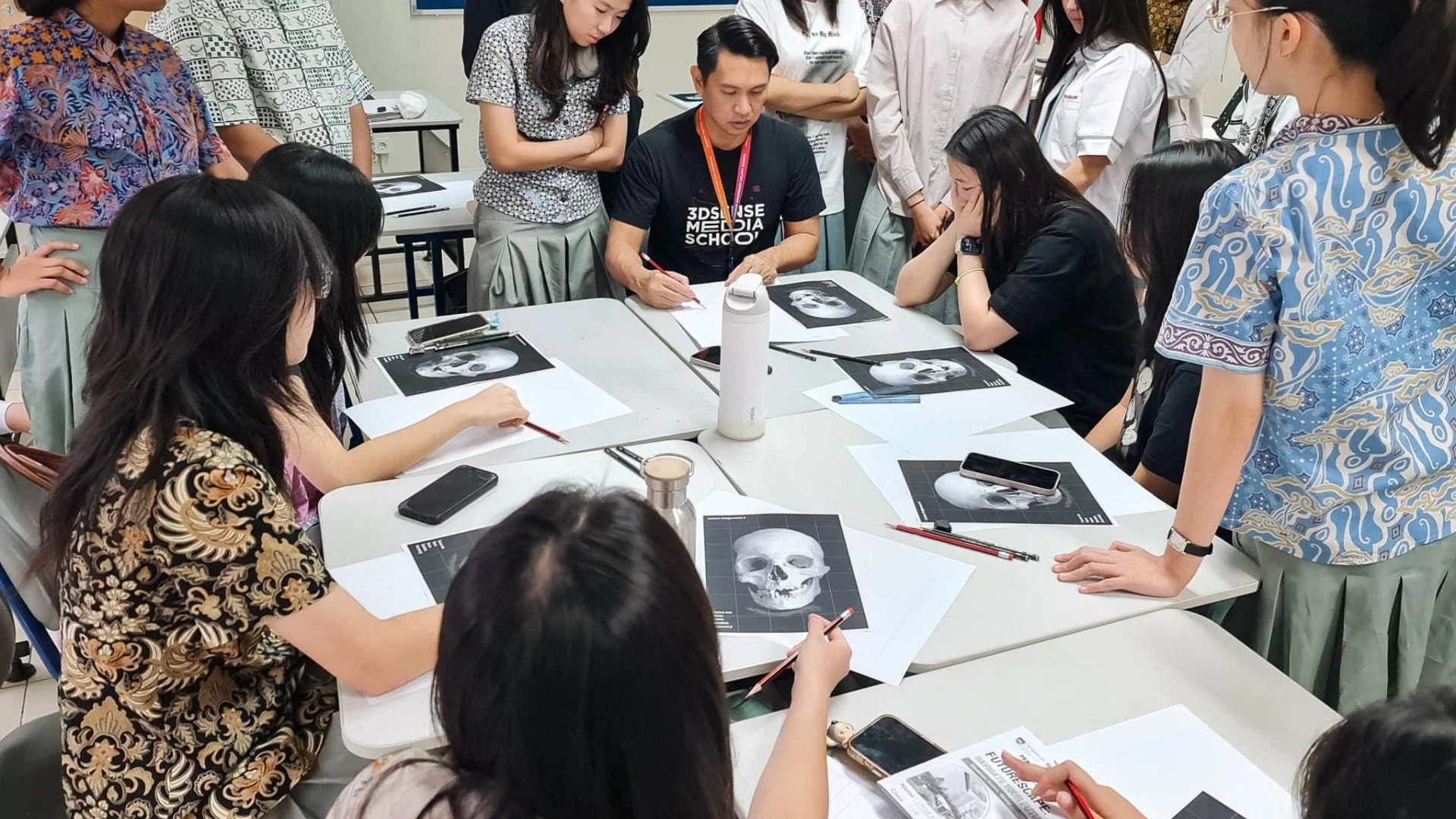
So where do drawing skills come in? Quick sketches can help with planning ideas. Basic anatomy knowledge can support character work. Simple thumbnails can help visualize animation poses or scene layouts. And sometimes drawing helps artists communicate ideas during collaboration.
But none of that requires being an amazing artist before you start. In fact, many successful 3D artists don’t come from strong traditional drawing backgrounds, especially in more technical or production-heavy roles.
Featured Video: Character Intro 3D Animation Game Art by Rachel Leong, 3dsense Media School Student
What Really Helps Students Succeed
If you’re a high school student thinking about studying 3D animation or game art, it’s easy to assume success depends on natural talent. In reality, progress comes down more to mindset than starting ability.
Students who succeed:
- Stay curious.
- Experiment freely.
- Focus on learning fundamentals.
- Collaborate effectively on teams.
- Are open to feedback.
- Accept that improvement takes time.
- Don’t worry about being perfect from day one!
Training at 3dsense reflects this approach. Courses are designed to build skills step by step, focusing on industry workflows and practical experience inside real 3D tools rather than relying on drawing ability alone. Students aren’t expected to arrive as finished artists; they’re expected to be ready to learn, practice, and improve.
Bottom Line
You don’t need to be “good at drawing” to start studying 3D animation or game art.
If this is a path you’re curious about, the next step is to see how real training builds skills from the ground up.
3dsense Media School’s Game Art & 3D Animation program introduce industry tools such as Unreal Engine, Maya, and ZBrush while guiding students from foundational learning into more specialized areas.
Exploring how these programs and courses are structured can help you understand what learning actually looks like and decide whether this creative path is the right fit for you!




 Chat Now