
Movement is one of the core principles of art and design, extending beyond the simple depiction of an object's transition in space. Within the domain of visual art and illustration, movement is the technique that guides a viewer’s gaze, transforming a static arrangement of elements into a dynamic, flowing visual experience.
For aspiring illustrators and visual art students, mastering movement in art can help you create compositions that exhibit visual vitality and tell a compelling visual story that resonates with your audience.
How Movement Brings Your Work to Life
In the arts, movement is the principle that guides the viewer’s eye through a composition using visual cues such as line, color, shape, value, rhythm, and alignment. By strategically applying these elements, artists control how information is perceived, ensuring clarity, focus, and engagement.
Visual artists use movement to:
- Control visual flow: Placement of elements dictates the rate of visual processing, the speed at which the eye traverses the work, thereby engineering a specific pacing and directional vector.
- Improve clarity: Movement ensures that the most important ideas or focal points are noticed first, guiding the viewer through the work in a logical sequence.
- Enhance engagement: Dynamic compositions prevent viewers from feeling lost or overwhelmed, keeping their attention focused and piqued.
- Support storytelling: Beyond how the composition looks, movement adds narrative and emotional direction, allowing the artwork to evoke action, mood, or tension even in a still image.
Techniques Illustrators Use to Create Movement
There are many ways to incorporate movement into your work, and each technique contributes to how viewers perceive your illustration. Some of the most essential ones taught in a foundational art and design program include:
1. Using Lines for Movement

Featured Art: Portrait Drawing by Woon Shi Yi
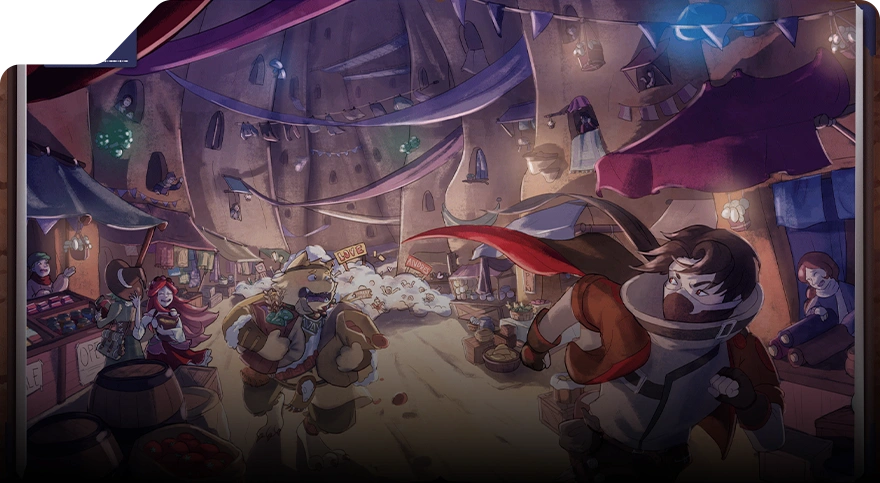
Lines are one of the most fundamental geometric elements of design, as they guide the viewer’s eyes through a composition and can instantly communicate direction and kinetic flow. When used intentionally, they establish directional flow, demarcate visual segments, and even suggest motion that the viewer can almost feel. Artists usually use lines to create movement by:
- Structuring the layout: Lines divide a composition's sections, creating a visual pathway that guides the audience from one area to the next.
- Leading the eye toward focal points: Implied lines (such as a character’s gaze) or literal lines (such as pathways, streaks, or borders) naturally draw attention to key elements.
- Creating the illusion of motion: Motion streaks, speed lines, and directional contours can suggest that an object is moving quickly, whether it’s a ball speeding to the right, flowing fabric, or a character sprinting across the frame.
2. Adding Rhythm for Movement

Featured Art: Concept Art & Illustration by Choomcherd Bond
Rhythm in visual design is the systematic, deliberate repetition or alternation of compositional elements, generating a visual pulse or beat analogous to a musical tempo. This repetition keeps the viewer’s gaze moving, producing a natural sense of flow that feels intentional and satisfying. It not only adds dynamism but also strengthens cohesion and structure, helping the composition feel organised and purposeful.
Artists and designers use rhythm to create movement by:
- Repeating shapes, icons, or patterns: Consistent repetition suggests progression, leading the viewer through the artwork step by step.
- Alternating colours, values, or forms: Variations in repetition introduce tempo, creating visual “beats” that speed up or slow down the eye’s journey.
3. Movement with Colour and Value

Featured Art: Concept Art & Illustration by Marc Baeza
Color and value are powerful tools for directing visual flow. By applying color theory strategically, illustrators can guide the viewer’s eye with intention and create a stronger emotional impact.
Warm colors such as reds, oranges, and yellows tend to advance toward the viewer, making them natural focal points. In contrast, cool colours like blues and greens typically recede into the background, creating depth and offering areas of visual rest. When you shift color temperatures across a composition, you create a natural rhythm. For instance, warm areas attract immediate attention, while cooler areas help slow the gaze and balance the overall piece.
Incorporating value contrasts also creates a sense of movement in your composition by guiding focal points and easing transitions. High contrast between light and dark areas draws the eye quickly and emphasizes key illustrations, while gradual value transitions guide the viewer smoothly from one area to the next.
4. Creating a Hierarchy for Movement

Featured Art: Concept Art & Illustration by Choomcherd Bond
Visual hierarchy is the arrangement of elements based on their level of importance, and it is one of the most effective ways to create intentional movement in design. When hierarchy is structured well, the viewer’s eye doesn’t wander aimlessly. Instead, it follows a clear visual path, moving from the most dominant element to supporting details in the exact order you planned.
- Scaling: Larger elements naturally carry more visual weight, immediately becoming primary focal points. When you scale objects intentionally, you control the pace of the viewer’s journey. For instance, a larger character or object becomes the starting point, while medium-sized elements are simply complementary to the main visual.
- Placement: Where you place elements influences the direction and speed of visual movement. For example, visuals at the top typically capture attention quickly, as viewers often start at the top of a composition. On the other hand, diagonal placement encourages the eye to travel across the page, creating dynamic energy.
5. Alignment for Movement

Featured Art: Portrait Drawing by Carie Oh
Alignment is defined as an art and design principle that shapes how viewers navigate your composition. By positioning elements along shared axes, you create visual order, balance, and a natural sense of flow.
When elements align, the viewer subconsciously follows these invisible pathways. These “visual highways” help the eye travel smoothly from one point to another, reducing confusion and strengthening narrative flow.
Different types of alignment create different movement effects:
- Left alignment: This structure acts as a strong visual anchor, as most viewers scan from left to right. As such, left-aligned elements feel stable, familiar, and easy to follow. This creates gentle, predictable movement, ideal for sequential storytelling, character-focused illustrations, and designs where comfort and clarity matter.
- Right alignment: This alignment builds tension and forward thrust. When subjects or text are placed along the right edge, the eye must travel across the entire composition to reach them, naturally creating movement. This approach injects momentum into otherwise static scenes, making it useful for action poses, editorial illustrations, and dramatic positions.
- Centre alignment: With your composition centred, it can pull the eye directly to the focal point. It creates symmetry and formality, often associated with order and significance. Incorporating this alignment is suitable for portraits, ceremonial or symbolic compositions, and designs that require immediate clarity.
6. Implied Movement and Action
Implied movement is the illusion of motion in a still artwork, suggesting energy, direction, or action without anything physically moving. Through thoughtful composition, artists guide the viewer’s eye and create a sense of life within the scene. This subtle suggestion of motion enhances storytelling, evokes emotion, and makes the artwork feel more dynamic and engaging.
Illustrators achieve implied movement through several techniques:
- Dynamic poses: Characters shown mid-leap, twisting, turning, or sprinting instantly convey momentum.
- Lines of action: A single sweeping directional line that defines the overall gesture and flow of a figure.
- Gesture drawing: Quick, expressive sketches that prioritise movement and energy over perfect anatomy.
Together, these methods breathe vitality into static images, giving viewers the sense that the moment continues beyond the frame.
Brush Up on Your Basics with 3dsense Media School’s Foundational Programs
If you want to strengthen your foundation in all the principles of art and design, including movement, enrolling in 3dsense Media School’s illustration course is one of the best ways to build a solid foundation.
At our design school in Singapore, you can explore our many programs that provide insights into what the other principles of design are and how to incorporate them into your work. You’ll learn directly from experienced artists and illustrators who are actively working in the field, gaining insights into real-world workflows while enhancing essential skills.
Every class includes project-based assignments that encourage you to apply what you’ve learned in practical ways. These hands-on exercises not only reinforce key design principles but also help you build a polished portfolio.
By the end of the program, you’ll be equipped with the confidence and skills needed to advance into our specialized courses and pursue your chosen career path, whether it’s as a VFX artist or animator.



 Chat Now