
Want to break into the world of digital art, but feel like you’re too far behind on software skills?
That’s a common concern, but not a valid one. Sometimes social media or online forums make it seem like everyone else has already mastered advanced art and design tools. This can create a false sense of pressure to “catch up.” But if you notice, they never show you where they started out — as students themselves!
The reality is, no one begins their journey into creative industries as an expert. Everyone has to start somewhere, and usually the most important factor isn’t which software tools you learn. That comes later.
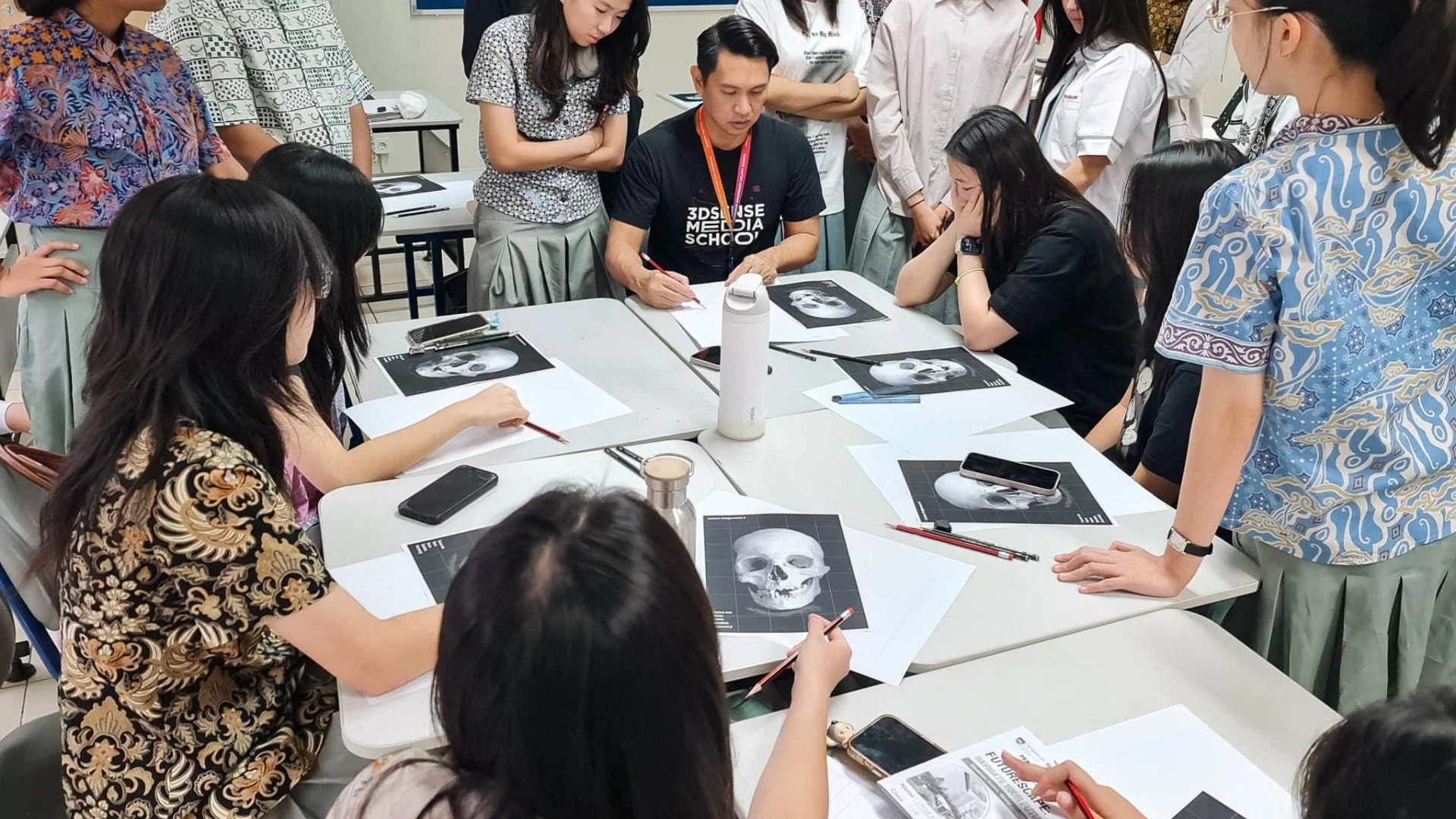
The most crucial thing to do first is to understand art foundational principles, such as:
- Observation: Learning to see real-world references, proportions, relationships, and details accurately.
- Composition: Arranging elements within a frame to guide attention and create balance.
- Perspective: Understanding depth, scale, and spatial relationships.
- Form and structure: Building 3D objects that feel believable and grounded.
- Color and lighting: Shaping mood, clarity, and impact using color and light relationships.
- Storytelling: Communicating ideas and emotions visually.
- Design thinking: Solving problems intentionally and creatively.
These skills apply across many disciplines. Whether you pursue game art, animation, visual effects, concept art, or design, strong foundations support better creative decisions.

Having a solid grasp of these and other fundamentals is what truly enables creative growth, design sense, and problem-solving talent. And the good news is that all of these abilities can be developed through structured learning and practice.
Creative education teaches students
how to see, think, and solve problems visually.
Next comes the software.
Learning fundamentals first also changes how students evaluate their own progress. Instead of measuring success by how many tools they know, they begin focusing on visual clarity, intent, and communication. This mindset encourages experimentation and reduces the fear of making mistakes, because challenges become part of the learning process rather than signs of failure.
Simply put, strong foundations help students recognize why something works or doesn’t work, allowing them to iterate more effectively and develop their own creative voice. Over time, this builds independence, so students rely less on step-by-step tutorials and more on their ability to analyze, refine, and improve their work through informed decision-making.

Why Starting With Software Can Feel Overwhelming
Many beginners assume learning software first is the fastest way into creative industries. Meanwhile, YouTube and social media tutorials often promise quick results, making advanced tools look easy to use.
But in practice, starting with software often creates frustration. That’s because without understanding core visual principles, students may learn technical steps without understanding the intent behind what they’re trying to do. Then, when problems inevitably arise, troubleshooting becomes harder because the underlying structure was never clear to begin with.
Developing “visual thinking” skills first
makes learning and using software much easier.
How Foundations Change the Learning Process
Early foundational skills make later technical learning more efficient. Students who understand form and structure grasp modeling tools more quickly because they already know what they want to create.
For example, strong composition skills improve layout decisions, while knowledge of light and color helps clarify rendering choices.
Instead of memorizing workflows , students begin with creative goals and use software as a tool to achieve them. That shift reduces overwhelm and makes adapting to new programs or pipelines far easier.
Creative careers evolve constantly, and tools change with them. Artists grounded in foundational principles carry transferable skills that remain relevant across industries, roles, and technologies. This adaptability supports long-term growth and prevents creative stagnation.

Tools Change, Principles Endure
Software is only a tool. It can be learned at any stage. And those tools evolve and change constantly.
But the fundamental principles listed above? Those endure forever.
Students with strong foundations move between programs more easily because they understand the reasoning behind their decisions. They know how to see, think, and solve problems visually, and can apply those skills to any software program, from ZBrush to Maya or Unreal Engine. In fact, with the right foundational experience, students can adapt faster to new tools, work pipelines, and industry demands.
In contrast, without the foundational knowledge, they’ll struggle no matter how much technical knowledge they may have. When students start by learning software shortcuts or technical workflows without understanding underlying principles, it can limit creative potential. Adapting to new tools becomes harder, as well.
Long story short, learning the fundamentals helps students develop skills that transfer across tools, industries, and even creative disciplines. So if you’re considering a creative career, realizing this difference will change how you approach learning and set you up for success!
Software teaches execution.
Foundations teach thinking.
At 3dsense Media School, this philosophy is reflected in our Art & Design Foundation Diploma Program .
This 4-month online program provides essential foundational training for digital artists, covering core design fundamentals such as composition, color theory, and visual storytelling, while introducing animation principles like movement, timing, and rhythm to create dynamic visual work.
Through exercises, critiques, and project-based assignments, students translate theory into practical skills and build a strong foundation adaptable to evolving digital tools and workflows.
Bottom Line
You don’t need to master software before starting your creative journey. Foundations shape how you think, solve problems, and create. Software can be learned at any stage, but strong fundamentals allow you to adapt, grow, and succeed over time!



 Chat Now