
In the development of interactive environments in games, artists and developers must synthesize spatial topology, pacing and flow, encounter placement, diegetic storytelling, and more to engineer an immersive gameplay experience.
By applying these core principles, they can create levels that are not only visually compelling but also challenging, intuitively navigable, and memorable for players.
What is Level Design?
Level design is defined as the technical discipline of constructing the physical space, environmental parameters, and challenge sequences within a video game to shape the player’s experience. It is the art and science of blending game mechanics, narrative, visual aesthetics, and player psychology to produce gripping and rewarding gameplay loops.
Core Principles of Good Level Design
Creating effective game level design requires understanding several foundational principles, which guide how players move, learn, and interact within the game world.
1. Spatial Design

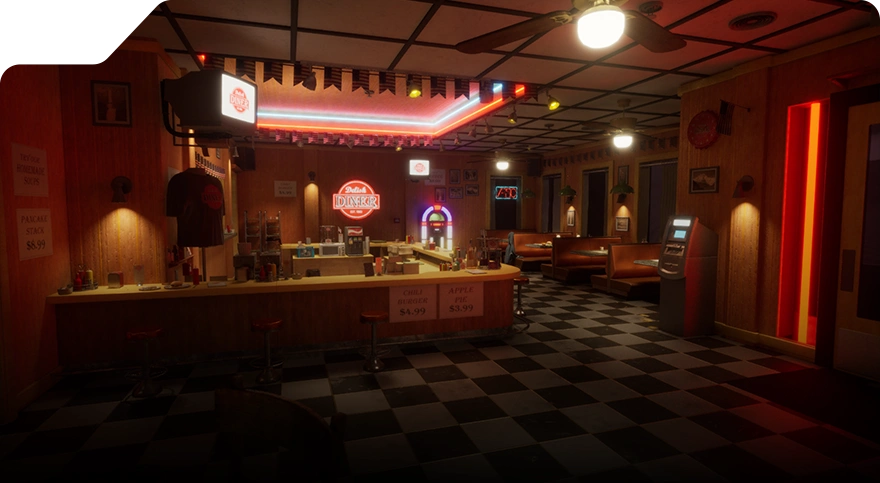
Featured Art: Environment 3D Modeling Game Art by Zachary Pang
A player’s primary interaction with a game is by navigating and interacting with the space. Therefore, spatial design must be engineered to ensure character locomotion is intuitive and engaging, minimizing unintended friction or navigational ambiguity.
This entails the strategic design of the following:
- Layout Planning: Strategically arranging the game environment to support smooth navigation and exploration.
- Environmental Landmarks: Incorporating unique objects or architectural features to orient players and create key spaces.
- Visual Signposting: Guiding players subtly through visual cues rather than explicit instructions, like brightly lit doorways indicating progressing paths.
- Spatial Contrasts: Balancing open and confined spaces, horizontal and vertical movement, and safe versus dangerous areas to control pacing and emotional impact.
2. Pacing and Flow
Pacing and flow determine how players emotionally and mechanically experience a level from start to finish. To maintain optimal engagement, each level should have the right amount of tension and relief, conflict and feedback loops.
The pacing should have a deliberate rhythm:
- Introduce mechanics in a safe, controlled environment.
- Gradually increase the complexity of challenges.
- After intense sequences, provide players with opportunities to explore, gather resources, or absorb narrative details to prevent fatigue.
Meanwhile, the flow should include:
- Logical progression from one objective to the next
- Smooth transitions between combat, exploration, and story
- Clear escalation of stakes and mechanics
3. Encounter Design
Encounter design focuses on developing engaging gameplay moments through the strategic placement of enemies, puzzles, obstacles, and interactive elements. While the purpose of a strong encounter is to challenge a player, it should also prioritize their agency, helping them make decisions that lead to a desired outcome or goal.
Factors that contribute to a well-designed encounter include:
- Enemy types and behaviour patterns
- Environmental advantages or hazards
- Resource availability (health, ammunition, tools)
- Multiple possible strategies for success
4. Environmental Storytelling

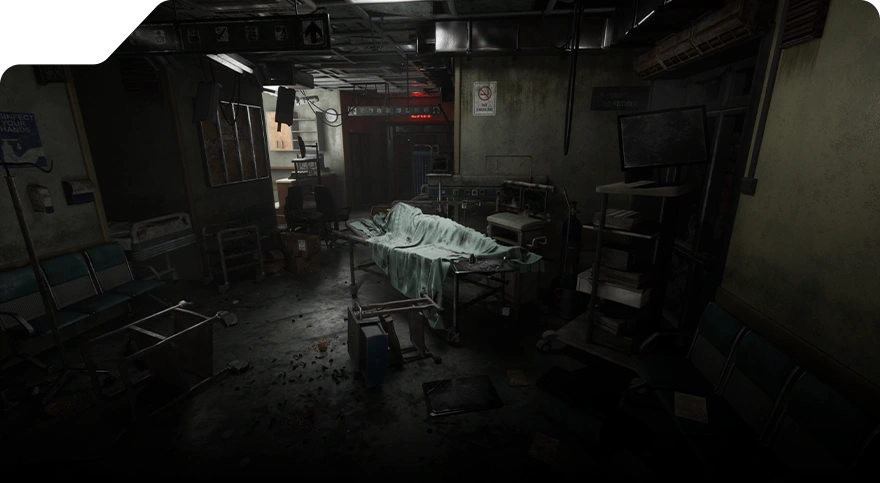
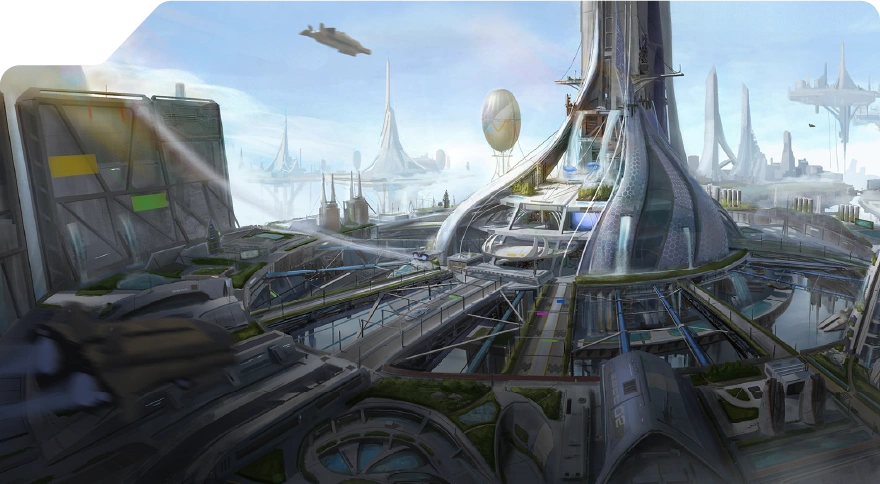
Featured Art: Environment 3D Modeling Game Art by Daniel Bador
Rather than exclusively on exposition via dialogue or non-interactive cutscenes, designers can use the environment itself to communicate narrative and world-building details.
Through the manipulation of scenery, lighting schematics, architecture, spatial audio, and object placement, players can uncover clues about past events, cultural context, or character motivations. For example, a destroyed cityscape might suggest a recent invasion, or a child’s abandoned toy in a ruined home may hint at tragedy.
This approach encourages curiosity and rewards exploration. Players feel more immersed because they are actively discovering the story rather than passively receiving it.
5. Usability
Effective usability ensures that mechanics remain responsive and predictable. Controls should align with player expectations, checkpoints should be fairly placed, and failure states should feel like learning opportunities rather than punishment.
Accessibility extends this philosophy further by ensuring that a wider range of players can engage with the game. This may include adjustable difficulty settings, colorblind-friendly palettes, scalable subtitles, alternative control schemes, and options for audio or visual assistance.
6. Collaboration and Balancing
Level design requires close collaboration with artists, writers, programmers, sound designers, and QA testers to ensure cohesion across all elements of the game. Strong collaboration and balancing transform a level from a collection of mechanics into an experience that supports the game’s artistic vision and gameplay goals.
Featured Video: Dawud Teo Demoreel (2023) - Game Art Diploma
The Level Design Process
Creating a well-thought-out video game level involves a series of thoughtful and interconnected steps, which include:
1. Concept Development
Level designers generate ideas, sketch layouts, and develop concept art to visualize the level’s aesthetics, mechanics, and overall player experience. This helps set the foundation for the level’s look, feel, and gameplay objectives.
2. Prototyping
Once a concept is chosen, designers build a basic prototype to test gameplay mechanics, object placement, obstacles, and overall pacing. Prototyping allows designers to evaluate how the level feels and functions before investing time in detailed assets.
3. Testing and Iteration
With a playable prototype, the level undergoes rigorous testing. Designers gather player feedback to identify challenges, confusion points, or engagement issues. Based on these insights, the level is iteratively refined to improve flow, difficulty, and overall enjoyment.
4. Level Refinement
The level design is then refined with detailed visuals, lighting, sound, and interactive elements. Designers fine-tune difficulty, pacing, and player guidance to ensure a seamless, immersive experience.
Tools Used in Level Design
Some of the common tools used for game design include:
Game Engines
- Unity: Widely used for 2D and 3D games, with extensive support for scripting and asset integration.
- Unreal Engine: Offers high-fidelity graphics, Blueprint visual scripting, and robust multiplayer capabilities.
3D Modeling Software
- Blender: Free, open-source software for modeling, texturing, and animation.
- Autodesk 3ds Max: Used for professional 3D modeling, rendering, and animation, allowing users to create expansive designs
- Autodesk Maya: Popular in game development for character modeling and animation.
2D Design Software
- Adobe Photoshop: Essential for creating textures, sprites, and concept art, Photoshop allows designers to craft the visual identity of a level.
- Adobe Illustrator: Useful for vector-based maps, UI elements, and scalable illustrations that maintain clarity across resolutions.
Frequently Asked Questions About Level Design in Video Games
What skills do you need to be a level designer?
To become a successful level designer, you need skills in:
- Creativity and Visual Design: Ability to craft immersive and engaging environments that enhance gameplay.
- Spatial Awareness: Understanding how players navigate and interact with 3D spaces.
- Technical Knowledge: Familiarity with game engines like Unreal or Unity, as well as 3D modeling and animation software.
- Storytelling: Designing levels that convey narrative or gameplay progression organically.
- Problem-Solving: Identifying and addressing gameplay flow issues, balancing difficulty, and guiding player behavior.
- Collaboration: Working effectively with game designers, artists, and programmers to bring levels to life.
At 3dsense Media School, we provide game art courses and 3D animation classes that can help aspiring designers build these skills through industry-standard workflows and hands-on exercises.
Is it hard to become a level designer?
Becoming a level designer can be challenging, but it is achievable with the right combination of practice, education, and portfolio development.
With dedication, regular practice, and guidance from structured courses, aspiring level designers can build the skills and portfolio needed to succeed in the industry.
For more video game design insights, check out how to craft a unique visual identity for your games through concept art and our guide on the different game design principles.




 Chat Now