
Visual effects software is the technical infrastructure of modern VFX production. Every explosion, fluid simulation, and composited shot in a feature film or television series passes through a layered stack of specialized tools, each designed to handle a specific stage of the pipeline.
SideFX Houdini, Foundry Nuke, and Autodesk Maya anchor that stack at the professional level. Below them sits a wider ecosystem of compositing, tracking, and rendering tools that together carry a shot from raw footage to final frame.
Different software serves different functions, and understanding which software is used for VFX means understanding the pipeline itself: a sequence of specialized stages, each with its own technical demands and its own toolset.
Key VFX Software by Function
VFX production is not a single workflow. It is a sequence of distinct technical stages, each requiring a different toolset and skill set. The categories below map the core functions of the VFX pipeline to the tools studios rely on to execute them.
1. Compositing
Compositing is the final assembly stage, where individual CG layers, live-action plates, and effects elements are combined into a single, coherent shot. The leading tools at this stage are:
- Foundry Nuke: The professional benchmark for node-based compositing in high-end film and television production. Its node graph architecture gives compositors precise control over how every element in a shot interacts with every other.
- Adobe After Effects: Widely used for motion graphics, VFX video editing software workflows, and smaller-scale compositing work. Strong across broadcast and commercial production.
- Blackmagic Design Fusion: A node-based alternative to Nuke, used across film and broadcast environments, and increasingly accessible through DaVinci Resolve integration.
Compositing software does not create visual effects. It assembles them. In the right compositor's hands, dozens of separately rendered elements, CG geometry, particle passes, and color-graded plates collapse into a single frame that reads as one continuous reality.
2. Simulation & FX
Simulation is where physics-based effects are built: fire, smoke, destruction, fluid, and particles. The primary tools operating at a studio level are:
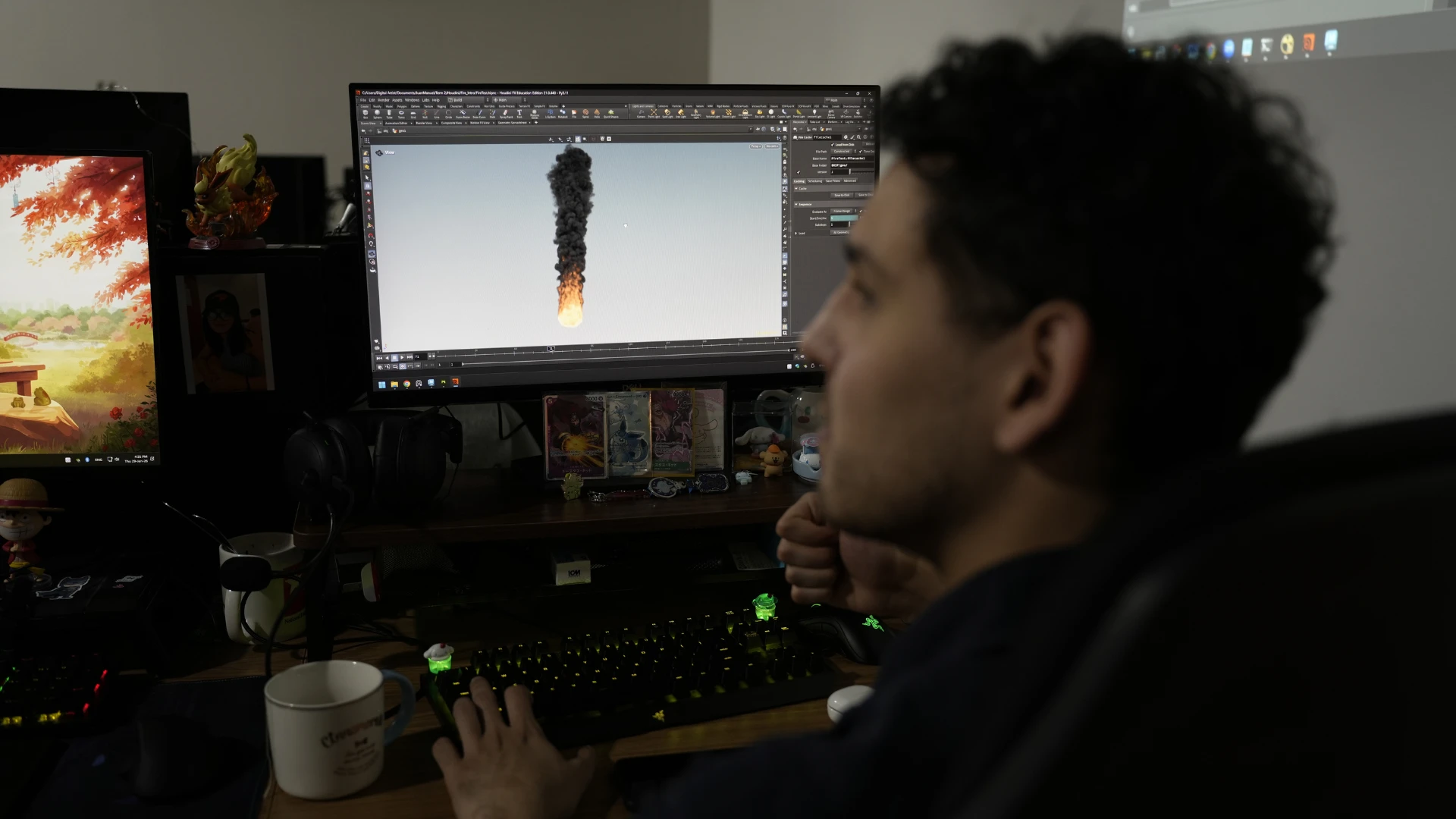
- SideFX Houdini: The industry standard VFX software for procedural simulation. Its node-based architecture allows artists to build complex, fully controllable simulations from the ground up.
- Autodesk Maya: Used alongside its modeling and animation capabilities for FX work, particularly in studios running a unified Maya-based pipeline.
- RealFlow: Specialized for fluid and liquid simulation, handling water, viscous materials, and particle-scale behavior at the physical accuracy demanded by feature-film production.
The procedural approach that defines Houdini means a simulation can be rebuilt, scaled, or redirected at any stage of production. The technical architecture handles the physics. The FX artist decides what the destruction looks like, how fast the fire moves, and where the smoke settles.
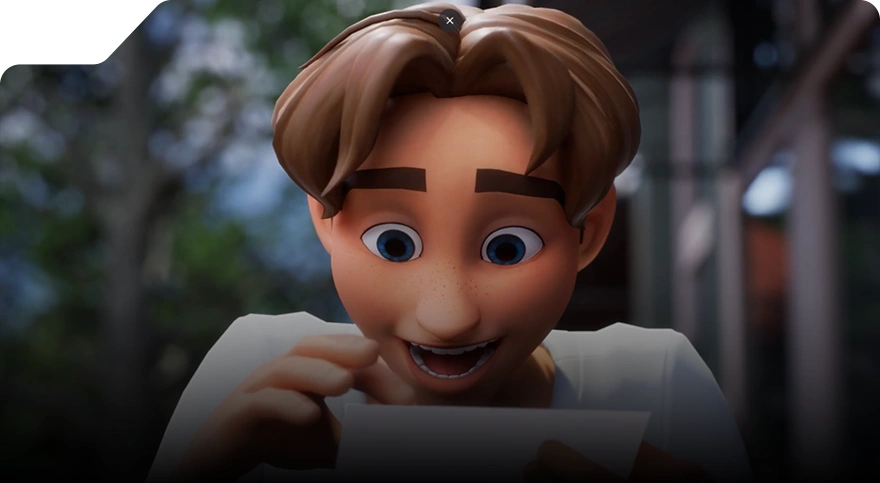
See these tools in action: the student demoreel below showcases visual effects work produced at 3dsense, spanning simulation and dynamics through to compositing and final finishing.
Featured Video: Demoreel by Jetrin Klungsupavipat, Joanna Wu, and Teh Zong Yi
3. 3D Modeling & Animation
Every asset in a VFX shot, whether a character, vehicle, environment, or prop, is built and animated during the 3D modeling process. The core tools include:
- Autodesk Maya: The dominant pipeline tool for character animation, rigging, and scene assembly in film and television VFX production.
- Autodesk 3ds Max: Industry-standard for modeling and animation workflows, with particular strength in games and architectural visualization pipelines.
- Blender: A free, open-source platform with a full range of modeling, animation, and rendering capabilities. Increasingly present in indie production and smaller studio pipelines.
- Cinema 4D: Preferred in motion graphics and VFX pipelines for its procedural workflow and tight integration with compositing tools.
- ZBrush: The primary tool for digital sculpting, generating high-frequency surface detail for characters, creatures, and props that feeds into the texturing and baking pipeline.
Geometry is the foundation of everything that follows. A model's topology determines how cleanly it deforms under animation, how accurately it receives textures, and how efficiently it renders. In the right modeler's hands, a mesh is not a static object, but a vehicle for performance, art and liveliness.
4. Tracking & Matchmoving
VFX shots built on live-action footage require precise alignment between virtual elements and the camera that captured the physical world. Tracking and matchmoving tools solve for that alignment:
- 3DEqualizer: The professional standard for camera tracking and matchmoving, used at the majority of major visual effects studios to extract accurate camera motion data from footage.
- Mocha Pro: A planar tracking tool that handles surface tracking, roto-splines, and footage stabilization, with plugin integration into both Nuke and After Effects.
Without accurate tracking data, a CG element will not sit convincingly in a live-action plate regardless of render quality. Tracking is the bridge between the digital and the physical camera.
5. Rendering
Rendering is the computational stage where geometry, lighting data, and simulation passes are translated into final image frames. The best software for VFX rendering at a production level includes:
- Unreal Engine: A real-time rendering platform used in virtual production, interactive media, and games pipelines. Its capacity for photorealistic output in real time has reshaped how studios approach on-set production and previsualization.
- Mantra and Arnold: Offline rendering engines integrated natively into Houdini and Maya respectively. Built for the photorealistic, high-quality output required across film and television production.
Offline engines like Arnold prioritize accuracy. Real-time engines like Unreal Engine prioritize speed and interactivity. The choice between them depends on the production type, the studio pipeline, and what the final frame needs to deliver.
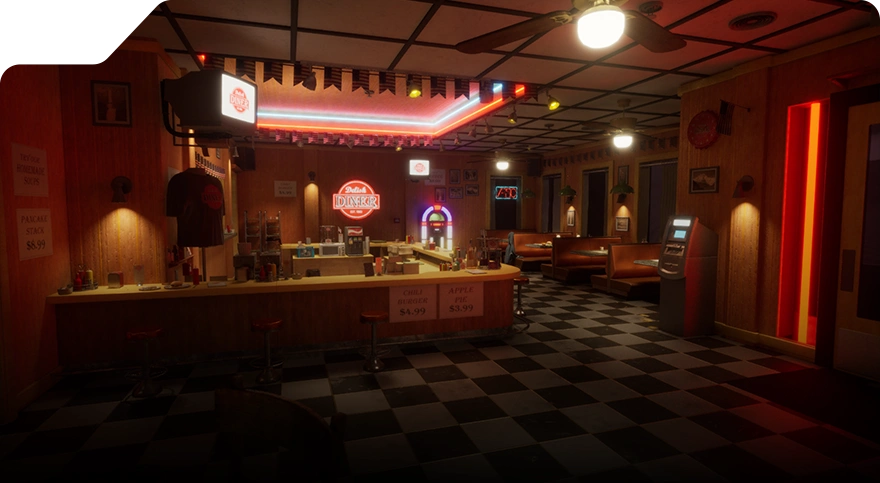
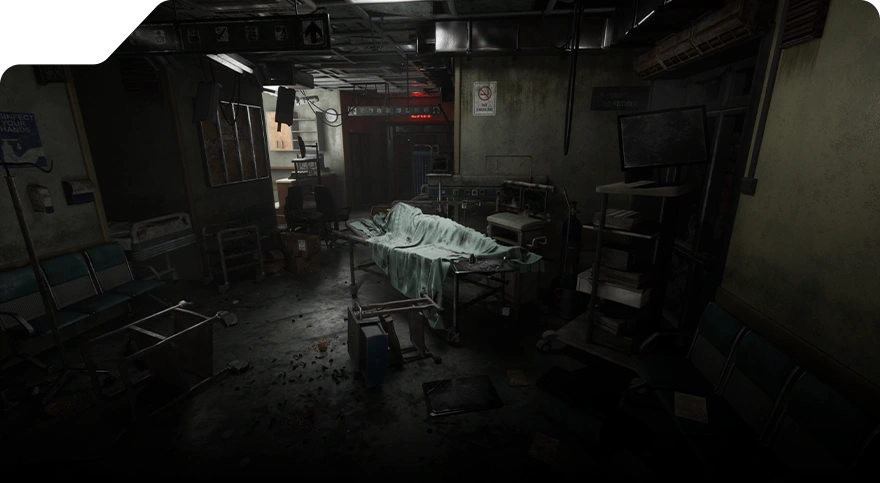
The piece below is a fully rendered and composited VFX shot by a 3dsense student — the tools covered above applied from raw pass to finished frame.
Featured Video: VFX Rendered Composition by Elyana Murni
6. Specialized Tools
Beyond the core pipeline categories, specialized tools handle specific production requirements:
- Substance 3D: The industry standard suite for texturing and material creation, used to define how surfaces respond to light and build the PBR maps that feed into any rendering engine.
Other tools enter production pipelines depending on project demands: Houdini Engine for procedural asset generation, Marvelous Designer for cloth and garment simulation, and Redshift for GPU-accelerated rendering where processing speed is a production priority.
Selecting the best visual effects software for a project depends on the required effects, the studio's pipeline, and the production scale. No single tool handles every stage. The VFX pipeline is defined by how its specialized tools work together in sequence.
Build the Skills to Work Across the Pipeline at 3dsense Media School
Knowing the tools is the starting point. Building the technical proficiency to operate them at a production level requires structured mentorship, hands-on project work, and training built around real studio workflows.
The 3D Animation, VFX & 3D Modeling diploma at 3dsense Media School is a 12-month intensive VFX diploma course designed around the software and pipeline stages that professional VFX production depends on. Students train with industry-standard tools across modeling, simulation, compositing, and rendering, guided by lecturers with active or former studio experience.
Program highlights:
- Hands-on training across the full VFX production pipeline, from modeling and simulation to compositing and rendering.
- Project work structured around real studio briefs and international production standards.
- Mentorship from lecturers with professional studio backgrounds, accessible inside and outside class hours.
- A production-ready portfolio built to meet the expectations of studios working in film, television, and games.
- One of the Top 5 Creative Schools Worldwide (The Rookies, 2025).
3dsense is recognized as a leading 3D media school in Singapore for specialized training in digital arts. If you’re interested in product design programs or diplomas in game art, browsing our diploma courses is a practical first step.








 Chat Now